CHE GUEVARA IMAGE STILL SELLS
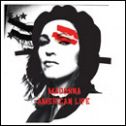
Most people looking at Madonna's most recent offering, American Life, will not recognize the visual allusion she makes in her beret, dark hair, severe expression, single red stars, military stencil distressed type font. She's missing the trademark Cuban cigar, but the average consumer will not notice.
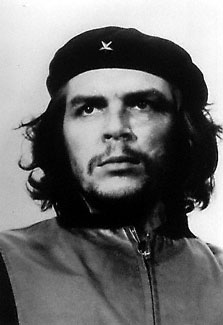
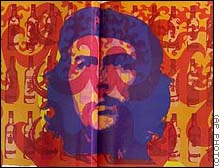
Others will surely see the echoes of Alberto Korda's famous 1960 photo in which Argentina-born Marxist revolutionary Che Guevara, attending a funeral in Havana, wears a black beret emblazoned with a red star. Korda later complained when the famous image was used in 2000 in a Smirnoff ad to promote vodka sales. Korda, who supported the use of the image to promote such causes as the revolutionary overthrow of elitist governments or repressive regimes, vigorously opposed the use of the image to promote vodka.
In the case of Madonna, her use of the Che image strangely echoes her "remaking" of Lena Wertmuller's classic film, SWEPT AWAY, which, in the original, was a potent Marxist critique of elitism, classism, and oppression. In Madonna's hands, all intellectual content is drained away, and it becomes a pseudo-violent cartoon of Shakespeare's The Taming of the Shrew. There, Madonna (or her husband/director Guy Ritchie) ham-handedly legitimizes and/or attempts to eroticize violence toward women. It's familiar territory for Madonna, who has borrowed heavily from the gay underground, including the "rough trade" and sado-masochism scene. However, in the original there are true questionings of society, culture, and human nature. Madonna consistently presents a significantly mainstreamed version, palatable to consumers unaware of its provenance.
As usual, Madonna packages a product that promises to be an investigation of culture, gender roles, societal attitudes, cowboys, dance, fashion, and war. As usual, the promise is empty, and the package is surprisingly devoid of intellectual content. Transgression turns into bait and switch; an echo of sensationalized reality television. The product promises to be a tasty, bite-sized nugget of the taboo, but instead, is a sack full of junk food.
The taboo is always fodder for commercialization, particularly when it deals with sex and violence.
The photo of Che Guevara, already turned into consumer candy, devoid of any traces -- fervent, ironic, or otherwise -- of Che's speeches which hammered home the message that "consumerism leads to bestialization," has a 40-year history of appropriation. It has, by now, lost much of its potency -- not simply for its use in vodka ads, but also by the absurd self-stylings of individuals who claim to be fighting for the people, as they line their pockets with the resources of the poor. Saddam Hussein comes to mind, as does Madonna, yet again.
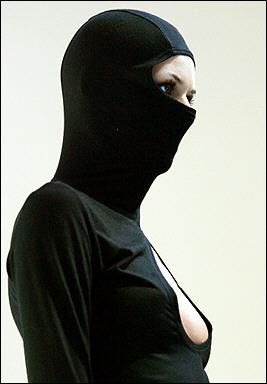
For a truly unsettling fashion statement, I would recommend taking a look at the offerings from the 2003 Russian Fashion Week, featuring the designs of designer Polina Filenko. She creates black evening dresses with dark hoods that evoke the image of the Chechen "black widows" who wore black veils and dresses as they sat in the Nord Ost theater, their hands on bombs wired to blow to oblivion themselves and the theater-goers they had captured. With her creations, Filenko creates a complex image that disturbs on many often-contradictory levels. It is fashion that forces one to think. http://story.news.yahoo.com/news?tmpl=story2&u=/030412/242/3rztd.html
Surprisingly, with her beret, Madonna manages to undermine her reputation as a women who metamorphosizes herself to stay on the cutting edge. The old beret and red stars are passe. Foolishly enough, her image will probably be misinterpreted as being vaguely patriotic.
Give Madonna a cigar.